The fashion giant is the first major retailer to complete a purchase through an AI assistant. Here is what they built, why it matters, and who is watching.
Gap Inc. just did something no major fashion retailer has done before.
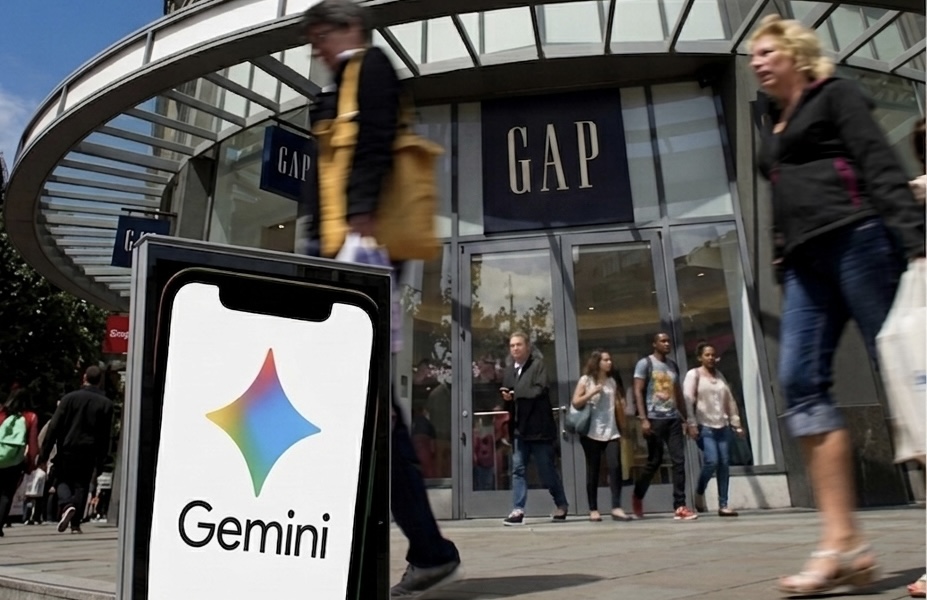
On March 24, 2026, at the Shoptalk Spring conference in Las Vegas, Gap announced that shoppers can now browse its catalog, get styling recommendations, and complete a purchase entirely inside Google’s Gemini AI assistant. No browser tab. No redirect. No website. The transaction begins and ends inside the conversation.
That makes Gap the first major fashion company to offer native checkout within an AI platform, a distinction that sounds technical until you understand what it actually changes about how people shop.
The End of the Search Bar as We Know It
For decades, shopping online followed the same basic script. You typed what you wanted into a search bar, scrolled through results, clicked into a product page, added it to a cart, and checked out. The whole experience was built around keywords and clicks.
Agentic commerce replaces that script with a conversation. A Gemini user asks something like “what should I wear to a spring wedding?” and the AI does not return a list of links. It surfaces relevant Gap products, shows options, checks sizing, and lets the shopper complete the purchase through Google Pay without ever opening another window.
Gap Chief Technology Officer Sven Gerjets put it plainly in an interview with CNBC: “It’s not just keyword search anymore. It’s conversations, and so we need to be relevant to that.”
The business logic behind the move is clear. Shoppers are increasingly turning to AI platforms for product discovery, and a retailer that is not showing up correctly inside those platforms is invisible to a growing segment of buyers. Gap decided not to wait.
How It Actually Works

The mechanics are deliberate and worth understanding because they signal how seriously Gap approached this.
Product information surfaced inside Gemini does not get scraped from Gap’s website. Gap feeds its catalog data directly to Gemini in advance, which gives the retailer tight control over accuracy, presentation, and the customer experience. The company essentially built its own presence inside the AI rather than leaving it to the algorithm to figure out.
When a shopper finds something they want, checkout completes through Google Pay using payment information already stored in Google’s system. Gap handles all shipping and logistics and remains the merchant of record throughout. The transaction lives inside Gemini, but Gap owns the customer relationship.
The integration also includes a second AI tool announced at the same event: a sizing feature built on Bold Metrics’ Agentic Sizing Protocol, which delivers personalized fit recommendations inside the conversation rather than directing shoppers to a static size chart. Gap is explicitly targeting two friction points that have historically driven online returns, fit uncertainty, and checkout friction, and addressing both at once.
One limitation worth noting: at launch, shoppers cannot link loyalty accounts or redeem points during Gemini transactions. Gerjets acknowledged this and said loyalty integration is on the roadmap.
The Infrastructure Behind the Partnership
Gap’s Gemini integration runs on Google’s Universal Commerce Protocol, or UCP, an open standard for agentic commerce that Google announced at the National Retail Federation conference in January 2026. The protocol was co-developed with Shopify, Walmart, Etsy, Wayfair, and Target, and has since been endorsed by more than 20 additional companies. Think of it as the shared language that allows AI platforms, retailers, and payment systems to communicate without each brand building custom connections from scratch.
UCP is what makes checkout feel seamless inside a conversation. It handles the mechanics of personalization, payment, and merchant control in a standardized way so that retailers can plug into the ecosystem without rebuilding their entire infrastructure.
Where Walmart Fits In
Walmart entered the Google Gemini conversation earlier, at NRF 2026 in January, when incoming Walmart CEO John Furner took the stage with Google CEO Sundar Pichai to announce their partnership. But the Walmart integration works differently from Gap’s.
When a Gemini user finds a Walmart product and decides to buy, the transaction routes to Walmart’s own checkout environment rather than completing natively inside Gemini. That is a meaningful distinction. Gap’s integration closes the loop inside the AI. Walmart currently does not.
That does not diminish what Walmart is building, and the company has been clear that the partnership will expand. But it does explain why Gap’s announcement earned the first designation. Completing a purchase inside the AI, without ever leaving the platform, is the standard Gap set. Now every other major retailer in fashion is watching to see what happens next.
What Comes After Gap
None of Gap’s primary competitors has announced a comparable Gemini checkout partnership. That window will not stay open long.
The pressure is real. Retailers who update their product data and digital infrastructure for AI-native environments will be discoverable inside these platforms as shopping behavior shifts. Those who do not will be harder to find, and the gap between those two groups will widen as AI assistant usage continues to grow.
For small and independent brands, the path already exists. UCP is an open standard, and Shopify merchants are among the early participants. The same agentic checkout infrastructure Gap is using is available to a business running on Shopify with a fraction of Gap’s budget.
Gap moved first. The question now is who moves second, and how fast the rest of the industry follows.