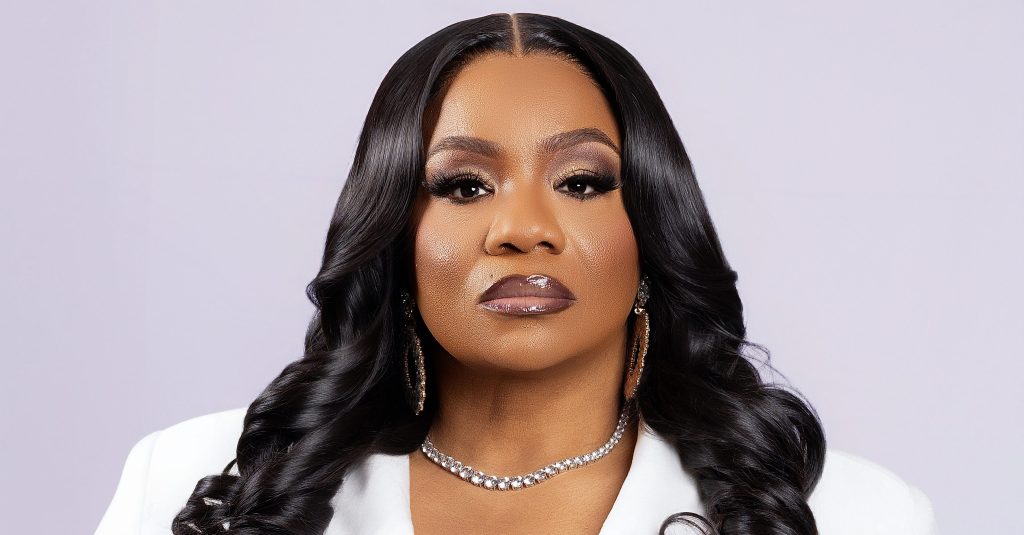
The comedian, actress, producer, and podcast host opens up about her new memoir in an exclusive interview with Bacon Magazine.

Comedian, actress, producer, and podcast host Patricia “Ms. Pat” Williams-Lee is opening up about her new memoir, Ms. American Dream: A Memoir of Making It, No Matter What, in an exclusive interview with Bacon Magazine. The book is the follow-up to her NAACP Image Award-nominated memoir Rabbit, and it picks up the story exactly where survival left off, tracing her path from food stamps and Section 8 housing to television deals, sold-out comedy tours, and a life she once only watched play out on somebody else’s TV screen.
For readers who only know Ms. Pat from The Ms. Pat Show, her Netflix specials, or her viral clips, Ms. American Dream fills in the years in between. It’s the story of what happens after the survival story ends and the harder, messier work of actually building a life begins. Bacon Magazine sat down with Ms. Pat ahead of the book’s September 29, 2026 release to talk about starting over with nothing, the house she almost lost chasing an illusion of success, and the mindset shift that changed the direction of her entire life.
From Rabbit to Ms. American Dream
Ms. Pat’s first memoir, Rabbit, told an unflinching survival story. She grew up in one of Atlanta’s poorest neighborhoods, became a mother at fourteen, sold drugs as a teenager to support her children, and survived violence and incarceration before finding her way into comedy. That book earned critical acclaim and an NAACP Image Award nomination, and it laid the foundation for The Ms. Pat Show, the Emmy-nominated BET+ sitcom based on her life.
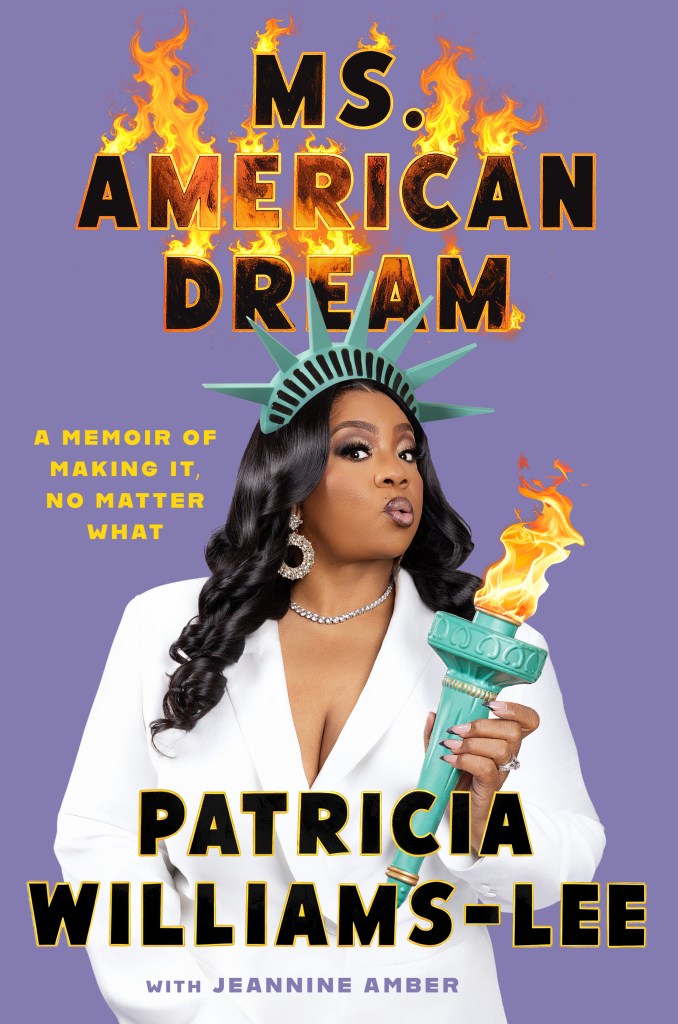
Ms. American Dream is a different kind of book. Where Rabbit was about getting out alive, this one is about what happens once you’re out, and how little anyone prepares you for what comes next. Ms. Pat has been candid that this book goes beyond a success story. It unlocks an honest account of the mistakes she made along the way, many of them financial, and the things she had to learn on her own because no one had ever taught her.
That distinction matters, and it’s exactly why Bacon wanted to talk to her. Bacon Magazine exists to tell the stories of women building something out of nothing, and Ms. Pat’s account is not a clean, straight line from poverty to success. It’s a testimony about starting over more than once, misunderstanding what success was even supposed to look like, and having to relearn the definition of the American dream from scratch.
Ms. Pat has described the book as an honest reckoning with what “making it” actually costs, promising readers the real, unfiltered version of her rise rather than a polished highlight reel. That framing sets the tone for the entire book. It’s a woman in her fifties looking back at the choices she made once the spotlight found her, some of them smart, plenty of them not, and being willing to put all of it on the page rather than editing herself down into a tidier success story.
The book’s marketing leans into that same honesty, describing it as a sharp, funny look at class, strategy, and reinvention rather than a typical Hollywood rags-to-riches tale. That contrast is one Ms. Pat clearly cares about. She isn’t interested in being flattened into an inspirational quote. She wants readers to see the strategy, the missteps, and the reinvention all together, because that’s a far more useful story for the women reading it than a clean narrative of overnight success ever could be.
Starting Over With Nothing
Before Ms. Pat became a household name, she had already built a following as a stand-up comedian in Atlanta. She was getting stage time, building relationships, and starting to become known in the local scene. Then her husband’s job took the family to Indianapolis, and everything she had built had to be left behind.
“I was already doing comedy in Atlanta. I was kind of building a name for myself, and then I got to Indiana, and it’s like I had to start over. Nobody knew me. I didn’t have no fans,” Ms. Pat said. “So I had to get out and start grinding even harder because there were no urban rooms. It was just white rooms.”
That shift wasn’t just about geography. It meant stepping into rooms that had never seen a comedian like her, telling stories that predominantly white, predominantly male audiences had never heard delivered quite that way. She admits she wasn’t sure at first that those new audiences would connect with her story at all.
“I don’t know how to be nobody but myself. So I had to introduce them to Ms. Pat, which was hard at first because I didn’t really think that they would understand the things that I was talking about and what I had been through in life,” she said. “But then I realized that poverty has no color. It has a class, but no color.”
“Poverty has no color. It has a class, but no color.”
Ms. Pat
She explained that realization in more detail, describing how audience members who looked nothing like her still recognized themselves in her stories.
“Some of the people in the audience understood what I was talking about when I said I was a teenage pregnancy, you know, I dropped out of school, and I had this struggle,” she said. “Because I was taught by a black mama, you know, white people are better than you; never look them in the eye; they’re the devil. And when I realized some of that might have been true, but when it comes down to poverty, we all pull. Having a zero account in your bank account is the same as any kind of color.”
It’s a striking admission, one that speaks to how much of her early worldview she had to unlearn in real time, on stage, in front of strangers, in order to build the career that eventually made her famous. Starting over in Indianapolis meant rebuilding more than an audience. She had to rebuild her own understanding of who could relate to her, and who couldn’t.
Chasing an Illusion
One of the most honest moments in Ms. American Dream, according to Ms. Pat, is the story of almost losing her first house. It’s a story that has nothing to do with comedy and everything to do with the financial blind spots that come from growing up without anyone to teach you the rules of the game.
“Not being taught anything about financials, nobody dared to talk me out of the bad loan that I got into. We had to bust our ass to save our house,” she said. “I wanted more of the American dream. So I took the equity out of my house and got a bad loan and thought I was going to buy a bigger and better house. I almost lost my damn house. I ended up with two mortgages on the house and didn’t know anything about a balloon payment. I had paid on that loan for over 25 years, and one day they just sent the check back and said, ” No, we need all the money.”
The mistake, she said, wasn’t just a financial one. It was rooted in a much bigger misunderstanding of what she was actually chasing. She traces her early idea of the American dream back to television, to the images of family life she grew up watching without ever having lived anything close to it.
“I grew up watching Leave It to Beaver and the Brady Bunch. Those white people look happy,” she said. “That wasn’t no happy. People ate oatmeal every day. I wondered what the beaver’s head.”
It’s a funny line, but underneath it is a real critique of how success gets sold, especially to people who grew up with nothing. Ms. Pat said a conversation with a coworker years ago reshaped how she saw that illusion entirely, and it’s a moment she still thinks about decades later.
“He told me the American dream was a trap. He said, ‘ They want you to buy things so you can work your debt self to pay for them. You’re never going to enjoy them because you’re always going to be working,” she said. “I’m 54 years old, and I still think about him from time to time. I realized the American dream to me is happiness. You shouldn’t be able to buy the American dream.”
“I realized the American dream to me is happiness. You shouldn’t be able to buy the American dream.”
Ms. Pat
Asked what that dream actually looks like now that she has the means to buy nearly anything, she didn’t point to any of it.
“When I walk in this door, and I hear those kids laughing at the table, [cheating each other in a game], and my husband [is raising] his voice [at them], and we [are] all sitting there [eating], and we’re just having a good old time. That’s my American dream,” she said. “I’ve had the materialistic thing that society says you should have, but that didn’t make me happy. My family does it for me.”
It’s a full circle moment for a woman who once watched sitcom families from a distance, believing they had figured out something she never would. Now, by her own account, the version of happiness she was chasing was never about the house at all.
Learning to Love Herself First
If there’s a single turning point at the center of Ms. American Dream, Ms. Pat says it isn’t a career breakthrough or a financial win. It’s leaving an abusive relationship and learning to love herself before she ever met her husband of 33 years.
“When Tina Turner came out with What’s Love Got to Do With It, I was in a very abusive relationship. I said, if this is love, I don’t want it,” she said. “I started to love myself, and I left that relationship, and I never looked back.”
She was direct about what that relationship had cost her, and how clearly she remembers the moment she decided she deserved something different.
“If not, you’re gonna keep on accepting the same abusive thing. I said, I’m tired of being punched in the eye. I’m tired of getting a shot in my ass for gonorrhea. I’m tired of baby mamas showing up at my door. I deserve better. And that’s where I went out and got it,” she said.
What’s notable is that she doesn’t frame that chapter of her life with regret. Instead, she treats it as necessary information, the kind of lesson that shaped everything that came after it.
“It’s nothing wrong with having a bad relationship. Everything in your life that you go through should be some type of learning situation,” she said. “You should learn something from it and say, I ain’t doing that shit again. I know better next time.”
That mindset, she said, is exactly what allowed her to recognize a partner who would actually show up for her, and stay, through everything that followed.
“You know, I’ve been married for over 33 years. This man was down with me when nobody was down with me,” she said, recalling some of the lowest points in their relationship, including financial strain she put on him early on. “Oh, the shit I’ve taken this man through, all the things this man had helped me raise all these kids. And when people told me to leave, he did not leave.”
She credits him not just for standing by her, but for the years of steady, unglamorous work that gave her the foundation to eventually chase comedy full time.
“When I walk out that door, and I see my husband at home retired, knowing that all the crap he put up with me, all the long hours he worked, and all the times he worked as a construction worker. I can say all for him believing it, just the support he gave me,” she said. “I saw that home on Section 8, watching the young and the restless and HGTV. This man was like, building houses, building houses. He paved the way for me to watch TV.”
Still Funny, Even When It’s Heavy
Even when she’s talking through some of the hardest chapters of her life, Ms. Pat’s humor never lets up. She says that’s not a performance choice so much as it’s simply who she is.
“I just say the things that people are scared to say out loud. And I’m being honest with it, where some other people can deliver the same message in a different way,” she said, using her husband as the example. “My husband is a prime example. My husband would be like, if one of the kids is musty, he’d be like, baby, you need to go take care of yourself. And I would say, look, you need to go wash your ass. You don’t smell my ass; I shouldn’t smell your ass. Go wash your ass; you smelled your ass before you walked over here.”

That contrast, her bluntness against her husband’s gentler approach, is something she describes almost like a running bit in their household, and it’s the same instinct that has powered her stand-up career for years. She’s built a name for herself by saying, out loud and on stage, the things most people only think.
Fame, she said, hasn’t changed how bluntly she talks, or how people sometimes underestimate her because of where she came from.
“People see me like, Big Pat. I said, bitch, I’m here trying to get the same deal you’re trying to get. Do you know how long I’ve been chasing this deal for?” she said.
Beyond the Memoir: Ms. Pat’s Growing Business
Bacon Magazine exists to highlight the full scope of what women in business are building, not just their most visible project. For Ms. Pat, comedy was always the entry point, but it has since grown into a multi-platform business built entirely on her own voice and instincts.

The Ms. Pat Show, based on Rabbit, earned her an Emmy nomination and cemented her as, in HuffPost’s words, one of the standout figures in modern sitcom television. Beyond the show, she headlines comedy clubs and theaters nationwide as one of the country’s most in-demand stand-up comedians. Her Netflix special, Ms. Pat: Y’all Wanna Hear Something Crazy?, brought her signature candor to an even wider audience, and her top-rated comedy podcast, The Patdown with Ms. Pat, has become a regular home for the same unfiltered honesty that defines her stand-up.

She has also built a presence in unscripted television with her court show, Ms. Pat Settles It, where she trades her microphone for a gavel, and in digital media with her YouTube cooking show, Whiskin’ It All with Ms. Pat, a weekly series where guests teach her new recipes in a casual, conversational format. Taken together, it’s a portfolio that spans scripted television, unscripted television, stand-up, podcasting, and digital content, all of it built around the same voice she first tested in those Indianapolis comedy rooms where nobody knew her name.
Her Message to the Next Ms. Pat
Asked what she wants Ms. American Dream to hand off to the next woman nobody’s betting on yet, the answer Ms. Pat gave wasn’t about strategy, business plans, or financial literacy, even though those threads run through much of the book. It came back, again, to loving yourself first.
“Learn how to love yourself. A lot of the reason why I went through the things I went through is because I did not love myself,” she said.
She was equally direct about tuning out other people’s expectations, whether that meant family, industry gatekeepers, or strangers who couldn’t picture her succeeding.
“Don’t let nobody ever dictate what you should be,” she said. “People ain’t going to believe in your dream. Just keep believing in what you believe in and speak it. It will come true.”
It’s a fitting closing note for a memoir that spends as much time examining illusions of success as it does celebrating the real thing. For Ms. Pat, the real American dream was never the bigger house, the nicer car, or the version of happiness she saw on television growing up. It was learning, slowly and sometimes painfully, what she actually wanted, and who was actually worth building a life with.
What makes Ms. American Dream stand apart from the wave of celebrity memoirs currently on shelves is exactly this refusal to smooth over the parts that don’t flatter her. Ms. Pat isn’t asking readers to admire her from a distance. She’s asking them to sit with the specifics, the balloon payment she didn’t understand, the coworker’s warning she brushed off before it actually landed, the years she spent accepting less than she deserved before she believed she was worth more. Those are not the details a publicist would typically highlight, but they’re the details that make the book useful rather than just entertaining.
That usefulness is exactly why this story matters for Bacon’s readers. Women building businesses, careers, and lives from nothing rarely get an honest account of what the climb actually looks like once the hardest part, survival, is behind them. Ms. Pat’s story picks up precisely where most inspirational narratives stop, at the moment success arrives and a whole new set of problems, financial, emotional, and personal, show up right behind it. She didn’t have a financial advisor or a mentor walking her through home equity loans or balloon payments. She had to learn it the way she’s learned everything else, by living through it and being honest about what it cost her afterward.
There’s also something worth noting in how unbothered she is by the idea that her story doesn’t look like a traditional success arc. She isn’t interested in putting on a polished performance for an audience that expects it. Whether she’s talking about nearly losing her house or the exact words she uses with her husband at home, the tone never shifts into something more careful or more marketable. That consistency, on stage, in the book, and in this interview, is probably the clearest evidence of the lesson she says she wants to pass on most: stop editing yourself down for other people’s comfort, and start believing your own story is worth telling exactly as it happened.
Ms. American Dream: A Memoir of Making It, No Matter What is set for release on September 29, 2026, from Atria Books. Readers can also find Ms. Pat each week on her YouTube cooking show, Whiskin’ It All with Ms. Pat, and on her podcast, The Patdown with Ms. Pat.
Editorial Credits
Editor-in-Chief: Andrea Walker
Interview by: Andrea Walker
Written by: Andrea Walker
Cover Design: Andrea Walker
Cover Photography: Fif Wilson LLC
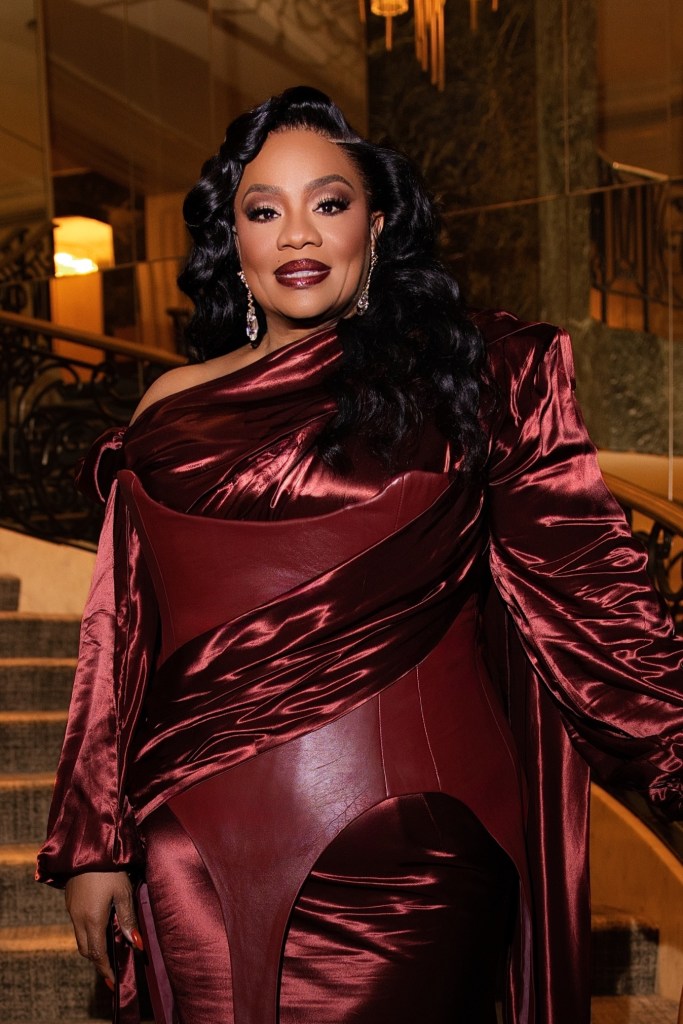
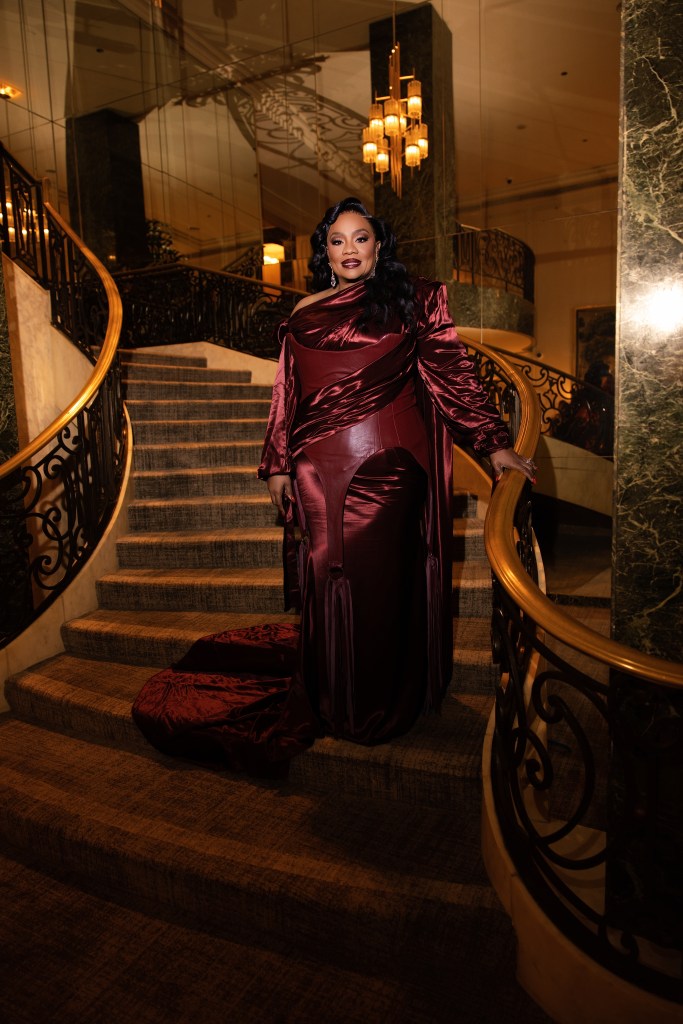
Emmy Photography: J Bolin
Emmy Styling: J Bolin