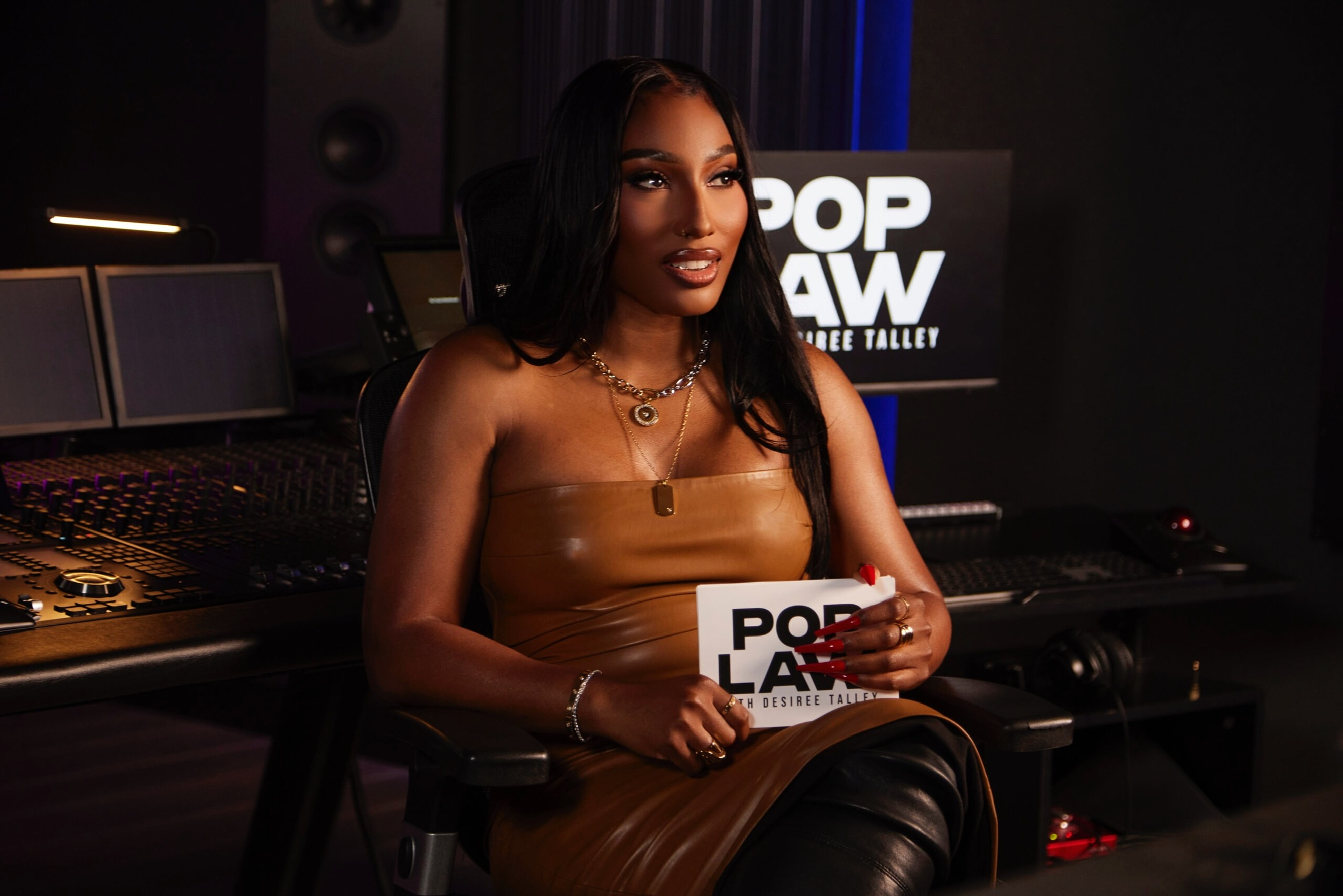
The VP of Legal & Business Affairs at Revolt Media and award-winning podcast host is closing the legal literacy gap for creators, entrepreneurs, and anyone building something the industry hasn’t made room for yet.

Desiree Talley and POPLAW are not your lawyers. She will be the first to say it. What she is, though, is something rarer — a legal powerhouse who turned her expertise into a resource the entertainment industry was never going to hand to Black creators on its own.
Talley is the VP of Legal and Business Affairs at Revolt Media and TV and the creator of POPLAW now in its third season with 14 award nominations. She is a graduate of Hampton University, St. John’s University School of Law, and the Clive Davis Institute of Recorded Music at NYU. Before Revolt, she built her legal career at Viacom Media Networks. By every measure, she has earned her seat at the table. What sets her apart is that she keeps pulling up a chair for everyone else.
Where POPLAW Came From
POPLAW did not start as a content strategy. It started with Talley at Viacom, fresh out of law school, watching an entire community of creatives around her try to build careers without a single legal resource they could access or afford.
“A bunch of my friends were in the creative industry,” she says. Whether designers, writers, artists, or singers, they all used to talk about how they did not have a lawyer to help them with their ownership rights, or they didn’t even know what intellectual property was. They would talk about sharing their ideas with various companies, the company not hiring them, and then seeing their idea in media campaigns on television.”
Her response was to create something that could reach many people at once without putting herself in the position of representing them all. “I was thinking, what way can I help my community — Black community, artist community, creator community — and give them legal education without being on the hook, per se? It was a way for me to be able to help multiple people at one time and talk about things in cases that are important to us, but also interesting from a business perspective in a creative land.”
The result is a show that looks like late-night television — polished set, serious guests, real substance — and delivers the kind of legal literacy that most creators have never had access to. “POPLAW breaks down culturally relevant lawsuits in layman’s terms for people who can’t afford an attorney,” she explains, “to be easily able to access and understand the situation and apply it to their own lives and businesses.”
What the VP Title Actually Looks Like
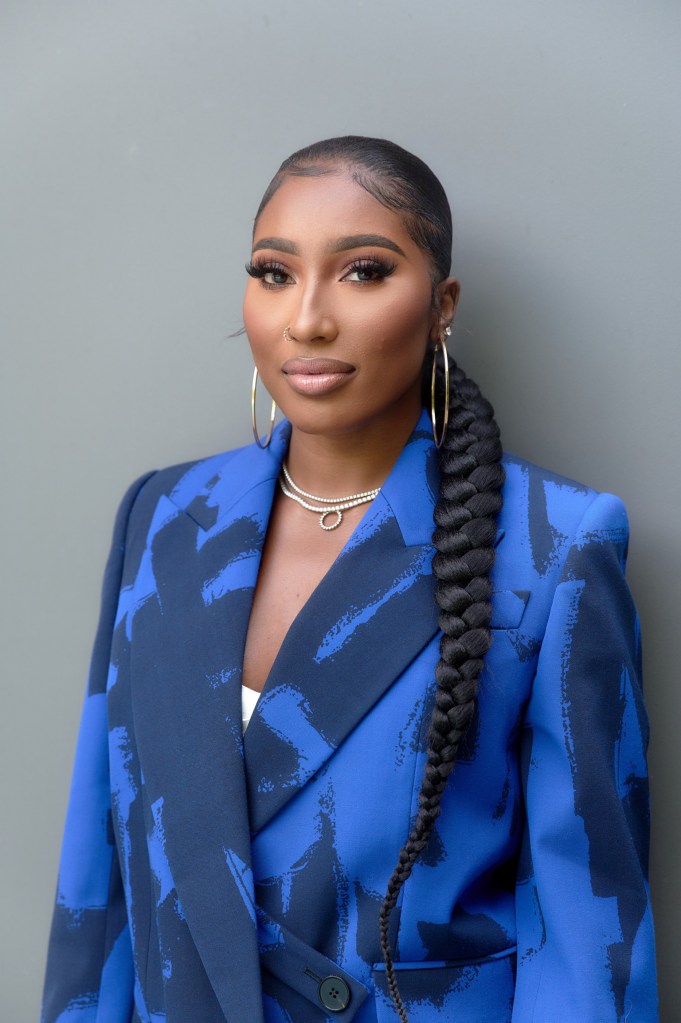
Running POPLAW alongside a full VP role at a prominent Black media company is not a small thing. But Talley does not frame it as a burden — she frames it as a choice she made intentionally, one that allows her to serve both the company and the community she built the podcast for.
“My day-to-day at Revolt changes — it varies every single day,” she says. “Mondays are typically my busiest days. I may be in meetings from 8 AM to maybe 2 PM. And then I have to actually do the work and all of the agreements.”
That work spans everything the audience sees at Revolt and much of what they do not. She handled the legal architecture for the 5th anniversary of Drink Champs. She worked on the deal for Caresha please. When Revolt World drew over 30,000 attendees, Talley was responsible for every agreement attached to that event — the venue, the talent on stage, the production. Most recently, she managed the legal footprint for Revolt House at South by Southwest.
“My world at Revolt is mostly everything front-facing,” she says. “All of the shows you see, all of the events, building out our new creator network — I’m handling all of the legal support that goes behind that.”
The Permission Slip Entrepreneurs Need to Hear
There is something in the way Talley has structured her life that deserves to be said plainly. She holds a VP title at a major media company and still shows up for her own podcast, her own community, and her own vision. She does not present this as a contradiction. She presents it as a model.
“You are your brand, you are your business,” she says. “And if you use that 9-to-5 to supplement the things that you love, that’s okay too. We don’t see what people go through behind the scenes when they’re building. All of the late nights, all the hard work — if you’re scrapping for food money, car gas, rent, having that cushion until you are able to fully commit is something that’s absolutely great.”
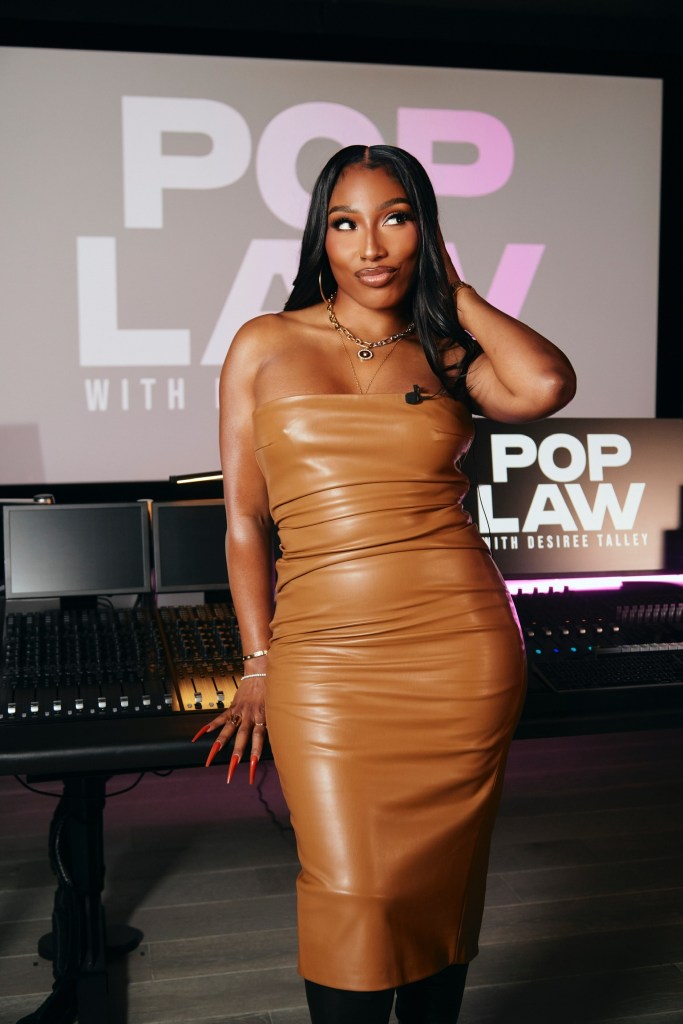
She also acknowledges the trade-off honestly. “There are days when I don’t have the time to put as much commitment and creativity into POPLAW as I would love because of Revolt.” But for Talley, the clarity came when she sat with the real question underneath it all. “I had to take a look at it and say, do I really want to be a creator or do I want to be a lawyer? And I determined that I love being a lawyer. Making sure creatives understand the legal significance of their deals so they can make informed decisions — that is what excites me more.”
What Every Entrepreneur Needs to Do Right Now
Ask Desiree Talley what women in business need to know, and she does not hesitate. She gives you a list — and every item on it has a story behind it that someone learned the hard way.
“Anything you put out, think about it as a business,” she says. “Make sure that it’s a legal entity. Make sure that your accounts are separate — do not put your business funds in the same account as your personal funds. You can pay yourself a salary, and you talk to a financial advisor about how to do that. And if you’re using your W-2 money to fund your business, make sure you’re set up properly so you can get the right tax incentives at the end of the year.”
On trademarking, she is especially direct. “Trademarking is very, very important. Even if you aren’t using it yet, you can still register it with an intent to use. It costs you $375, but when you’re ready, you already have it secured.” She adds: get the social media handles, lock down the domain, and be ready to launch.
Then she brought up NDAs — and not in the context most people expect. Not Hollywood. Not corporate. Everyday business conversations. The coffee meeting. Brainstorm with a friend.
“Everybody has to sign an NDA,” she says. “Whether you are sharing a business idea or telling somebody who you are dating, make them sign an NDA. And for me personally, if they push back on that, then that should tell you how you want to move forward. NDAs are something everyone should sign, particularly when you’re sharing business information — from an idea to an email to a document.”
She also issued a warning specifically for entrepreneurs building a side business while employed. “Pay attention to your employment agreement. Typically, employment agreements may say that businesses you start or ideas you have while at the company are owned by the company. There could be some caveats if the business is not similar to what the company does. But people share casually with their coworkers and bosses, and it can cost them everything.”
Streaming, Deals, and the Changing Landscape
The entertainment industry is restructuring in real time, and the money is not moving the way most creators think it is. Talley has a front-row seat to all of it.
“With music, there are standards that the Copyright Royalty Board sets for streamers and how they have to pay out artists,” she explains. “Spotify, Apple, Tidal — they all pay differently.” For film and television, the shift away from theatrical releases has quietly changed what actors earn. “A lot of actors don’t love the streaming aspect because they may not receive backend royalties the way they would from a theatrical release. That backend looks very different.”
Syndication is another casualty. “Shows that have been in long syndication are being canceled. Those syndication checks used to keep people eating for a long time, but the landscape is changing.” And in the creator economy, the platform migration is creating its own set of long-term questions. “Creators coming off YouTube to Netflix — that may be good in the short term because people need cash on hand. But you have to think long term: are you losing your audience, and can you bring them back?”
She points to The Breakfast Club’s Netflix move as a live case study playing out in public. “They have spoken out and said they’re losing their audience. It shows how the industry is changing, and there are a lot of tests going on. It’s definitely an opportunity for people to figure out that creativity, to figure out the different streamers and distributing platforms, and utilize AI tools as much as possible.”
Still Not Your Lawyer. But Exactly What You Need.
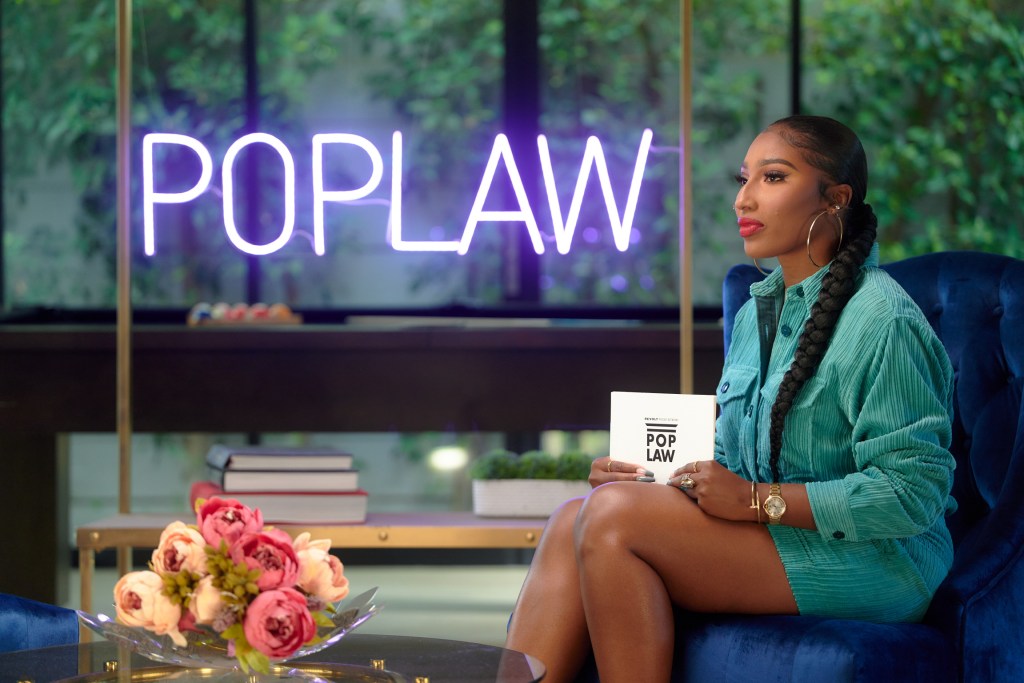
People slide into Desiree Talley’s DMs every day with their situations, their questions, and their cases they want covered. She answers them the only way she legally can — through the show. “People send me DMs of different cases they’re interested in or their situations, and I’ll talk about them on Pop Law. That’s my way of giving back and serving the two things that I love.”
POPLAW has 14 award nominations. It has featured executives, athletes, and industry heavyweights. It covers the lawsuits, the contracts, the rights, and the deals shaping culture — in a way that a first-generation entrepreneur in her first year of business can actually use. That was always the point.
“Making sure creatives understand the legal significance of their deals or their tools so they can make informed decisions,” Talley says, “is what excites me more.”
The show is there. The knowledge is there. Now it is just a matter of getting it in front of the people who need it — and if Desiree Talley has anything to say about it, that is exactly what is coming next.